Followkite resources
How to write a formal email
To write a formal email, use a specific subject, a respectful greeting, a short explanation of your purpose, one clear request and an accurate signature. Formal means appropriate and clear, not complicated. The examples below show how to send a formal email in ordinary business situations.
By Followkite. Last updated . Product built by Shahab Dev.
14 days, no card needed. Paid plans from $15 per workspace per month.
What is the format of a formal email?
A formal email gives the recipient enough context to understand who is writing, why the message matters and what response is needed. A concise subject and opening should carry that context without making the reader search through a long introduction.
| Part | Purpose | Example |
|---|---|---|
| Subject | Name the actual topic. | Request for the supplier onboarding form |
| Greeting | Address the correct person respectfully. | Hello Morgan, |
| Opening | State the reason for writing. | I am preparing our supplier information. |
| Body | Include the relevant facts. | The requested business details are attached. |
| Request | Make the next action explicit. | Could you confirm which form we should use? |
| Signature | Identify the sender accurately. | Your name, role and business contact details. |
Adapt the level of formality to the relationship and purpose. A first contact with a procurement team may need more background than a message to an established client. Neither requires inflated language or an invented claim of familiarity.
How do you write the message step by step?
- Write the request first. Decide what the reader should do: answer a question, confirm a detail or review an attachment. If there are several unrelated requests, separate the messages.
- Choose an accurate subject. Describe the topic rather than relying on urgency, mystery or a misleading reply prefix.
- Check the recipient and greeting. Confirm the spelling, role and address. Use only names and titles you can verify.
- Explain the context briefly. Introduce yourself if necessary and include the specific business reason for the email.
- Add the necessary detail. Use short paragraphs. For a choice between options, list the options rather than hiding them in a dense sentence.
- Make the next step easy. Ask a clear question. If a genuine deadline matters, explain it rather than manufacturing pressure.
- Review before sending. Check dates, links, attachments, recipient fields and the signature. Read the message as someone who has not seen the earlier discussion.
What does a complete formal business email look like?
Example 1: asking for information
Subject: Supplier onboarding requirements
Hello Morgan,
I am preparing the business information for our proposed supplier application. Could you confirm which onboarding form your team currently uses?
If another colleague handles this process, please let me know the appropriate contact route.
Kind regards,
[Name, role and business details]
Example 2: confirming a meeting
Subject: Confirming Thursday's project review
Hello Priya,
Thank you for arranging the project review. I understand that we will meet on Thursday at [verified time and timezone] to review the draft scope.
Please let me know if the time or agenda has changed. I will bring the updated document we discussed.
Best regards,
[Name]
Example 3: requesting a correction
Subject: Correction needed in the delivery address
Hello Jordan,
The address in the draft order differs from the address in our confirmed details. The correct address is [verified address].
Could you confirm the correction before dispatch? I have attached the relevant order reference for context.
Thank you,
[Name and order reference]
These are invented examples of structure, not real customer correspondence. Replace placeholders only with verified information. Do not reuse private customer details in a public template or add an attachment that the recipient has no reason to trust.
Which phrases and habits make a formal email harder to read?
Overly elaborate phrases can obscure a simple request. Instead of saying you are writing to bring a matter to someone's esteemed attention, explain the matter. Avoid unexplained abbreviations, long background stories and a subject line that says only Question or Important.
Do not use a polite tone to disguise a commercial pitch as an official notice. Make the purpose clear. For promotional business email, review the FTC's commercial-email guidance and the rules applying to your recipients. Professional formatting does not establish permission to contact someone.
How should you follow up without losing the formal tone?
Refer to the actual earlier topic and add a useful next step. Ask whether information is missing or whether the recipient is the right person. A message that repeats the entire first email without new context is harder to answer, even when its greeting is polite.
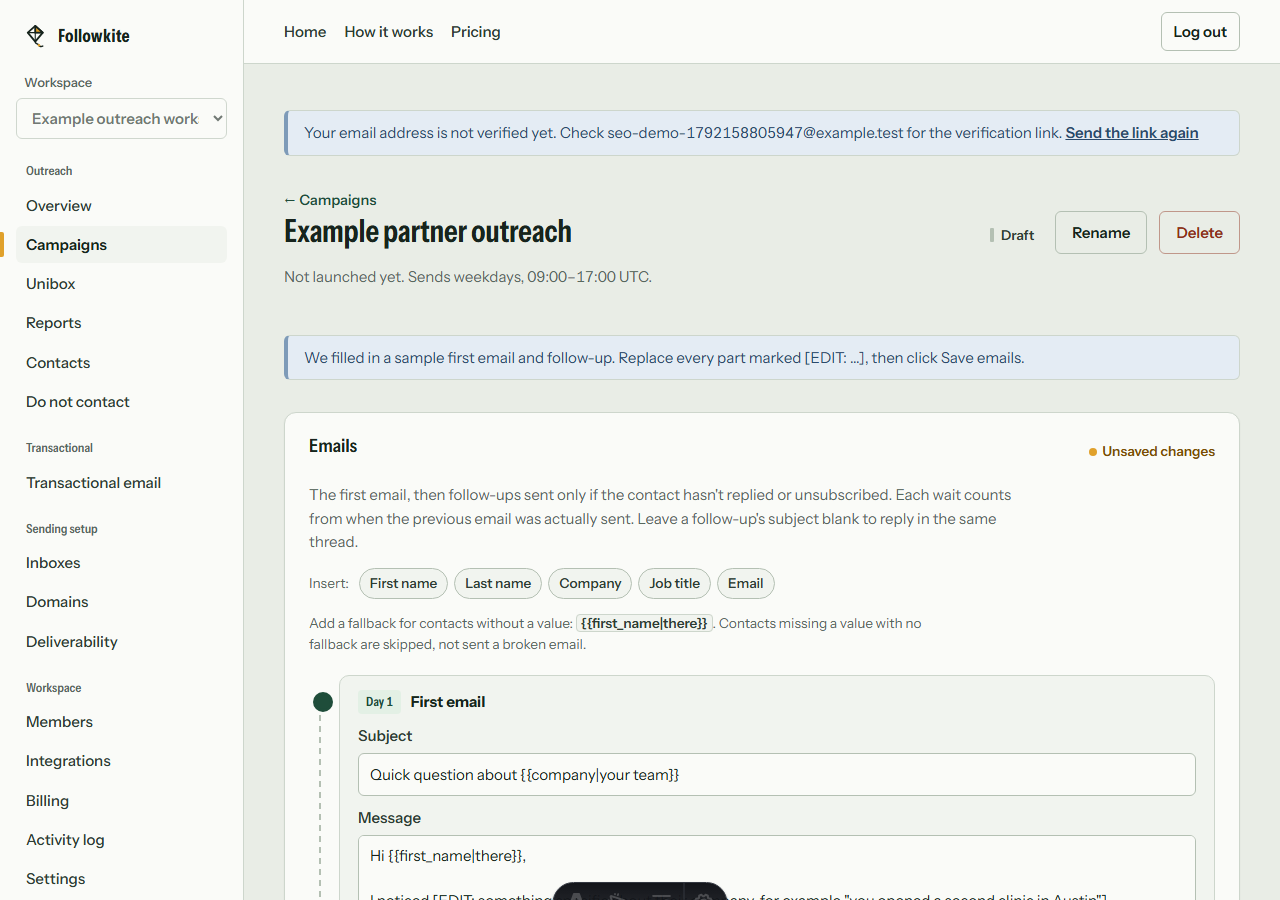
In Followkite, preview the subject, message and fallback fields before launching a suitable business sequence. Matched human replies stop queued follow-ups after synchronization. That behavior supports the administrative workflow; it does not make automation appropriate for every formal message.
What does Followkite cost?
Plans are billed per workspace. Mailbox hosting and domain registration are separate purchases. Choose a plan by total campaign sends, including follow-ups, rather than the size of your prospect list alone.
| Plan | Monthly price | Inboxes | Campaign emails / month |
|---|---|---|---|
| Starter | $15 | 5 | 3,000 |
| Growth | $40 | 25 | 15,000 |
| Scale | $100 | 100 | 60,000 |
The trial lasts 14 days with Starter limits and every feature. Followkite has no permanent free plan, inbox warm-up network, or guarantee of inbox placement. Review the full pricing and billing terms.
Frequently asked questions
How should I address someone whose title I do not know?
Use a verified name or a neutral greeting such as Hello followed by the name. Do not guess an honorific, qualification or personal detail.
Can a formal email use plain language?
Yes. Complete sentences and a respectful request are enough. Replace elaborate phrases with familiar words when the meaning stays accurate.
Should every formal message become an automated sequence?
No. A sensitive complaint, a personal negotiation or an active conversation usually needs individual attention. Use a sequence only when its audience, timing and follow-ups are appropriate.
Build a small campaign you can review
Connect a mailbox you control, check the audience and suppression list, and test with your own address before launching.
Create your workspace